
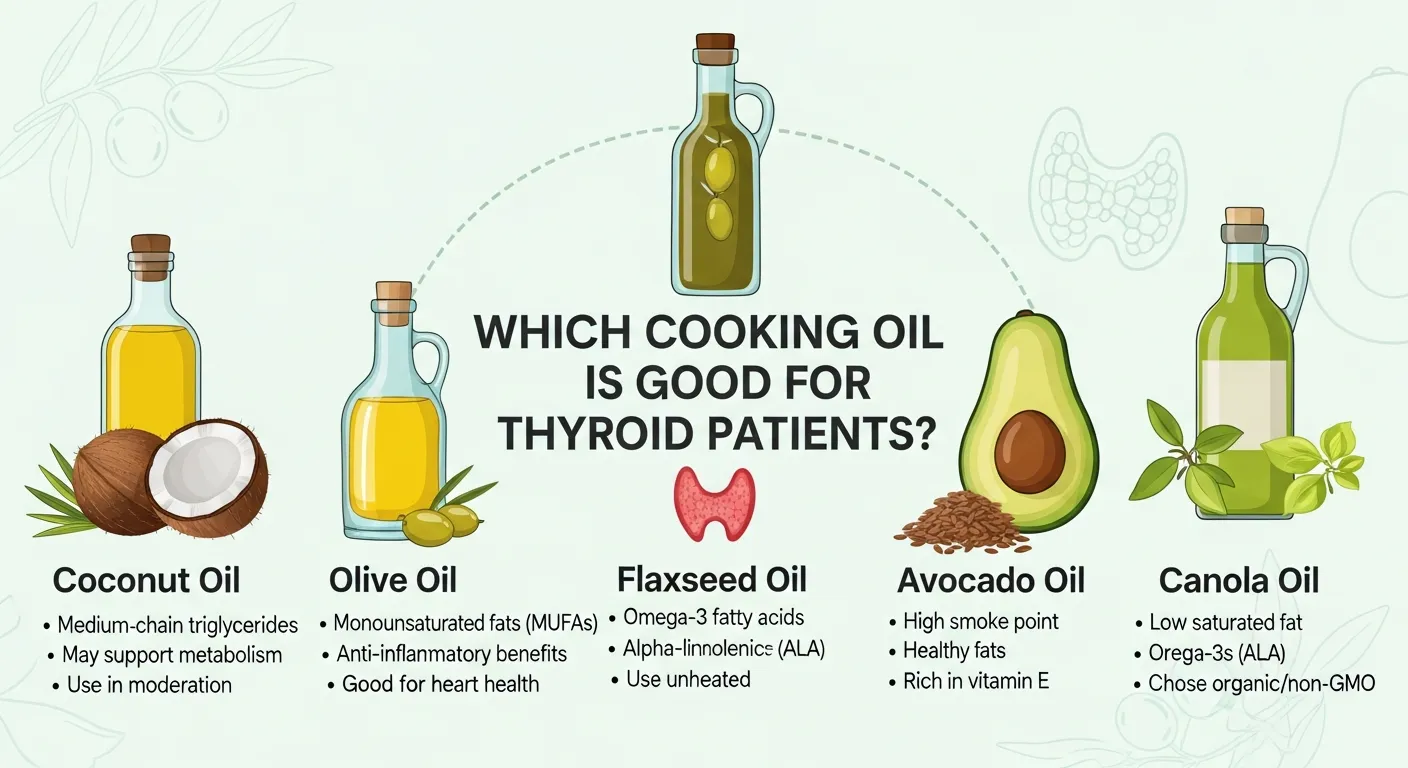
Imagine your body is a well-maintained car. The thyroid gland, that small butterfly-shaped organ in your neck, acts like the accelerator pedal. It decides how fast or slow your body burns energy. Now, think of cooking oil as the engine oil. If you use the wrong quality oil, the engine gets clogged, the car becomes sluggish, and eventually, it breaks down.
In our Indian kitchens, the smell of tadka (tempering) is the smell of home. Whether it is the morning Paratha or the evening Dal Fry, oil is everywhere. But for millions of Indians dealing with thyroid issues—specifically Hypothyroidism or Hashimoto’s—that spoonful of oil could be the silent reason why you still feel tired, bloated, or unable to lose weight despite taking medication.
You might be confused by the rows of bottles in the supermarket. Sunflower? Rice Bran? Olive? Desi Ghee? As a healthcare strategist who has worked with patients from Mumbai to rural Punjab, I know this confusion well. Today, we are going to clear the air. We will look at science, not marketing, to find the best fuel for your thyroid engine.
Transform Your Health Today
Are you struggling to manage your TSH levels despite a strict diet? Sometimes, expert guidance makes all the difference.
Understanding the Oil-Thyroid Connection
Before we list the oils, you must understand why it matters. The thyroid is very sensitive to inflammation (swelling inside the body).
Many modern cooking oils are high in something called Omega-6 fatty acids. While we need a little bit of Omega-6, getting too much of it acts like adding petrol to a fire—it increases inflammation. When your body is inflamed, your thyroid gland cannot work properly, and your cells cannot accept the thyroid hormone.
Our goal is simple: Choose oils that lower inflammation and support your metabolism.
Quick Summary: Best & Worst Oils for Thyroid
| Cooking Oil | Smoke Point | Thyroid Benefit | Usage Tip |
|---|---|---|---|
| Virgin Coconut Oil | Medium | Boosts Metabolism (MCTs) | Best for South Indian dishes |
| Desi Cow Ghee | High | Heals Gut (Butyrate) | Best for Tadka & Rotis |
| Extra Virgin Olive Oil | Low | Reduces Inflammation | Best for Salads & Drizzling |
| Mustard Oil (Kachi Ghani) | High | Anti-inflammatory (MUFA) | Best for North Indian cooking |
| Soybean/Vegetable Oil | Varies | Avoid | Can interfere with hormones |
*Note: Always choose cold-pressed (Kachi Ghani) versions for maximum thyroid support.
Research has shown that Medium-Chain Triglycerides (MCTs) in oils like Coconut oil can help improve basal metabolic rate (BMR) in hypothyroid patients.The Top 5 Cooking Oils for Thyroid Patients
Here is your definitive list, ranked by how much they help your thyroid health.
1. Virgin Coconut Oil (The Metabolic Booster)
WHAT is it? This is oil extracted from fresh coconut meat without using chemicals or high heat. In India, especially in Kerala and the South, this has been a staple for centuries. Ensure the bottle says "Cold-Pressed" or "Virgin."
WHY it works: Coconut oil is unique. It is packed with Medium-Chain Fatty Acids (MCFAs) or Medium-Chain Triglycerides (MCTs), specifically Lauric Acid. Unlike other fats that get stored in your hips or belly, MCFAs are sent directly to the liver to be burned for energy.
HOW it helps your Thyroid:
- Boosts Metabolism: Research suggests that MCTs can increase the number of calories your body burns, fighting the slow metabolism caused by hypothyroidism.
- Fights Bacteria: Lauric acid kills bad bacteria in the gut. Since good thyroid health starts in the stomach, this is crucial.
- Blood Sugar Control: It helps keep blood sugar stable, preventing the energy crashes many thyroid patients feel.
Best Way to Use: Great for South Indian curries, sautéing vegetables, or even adding a teaspoon to your morning coffee.
2. Desi Cow Ghee (The Gut Healer)
WHAT is it? Clarified butter made from cow's milk. It is the golden elixir of the traditional Indian kitchen, revered in Ayurveda.
WHY it works: Pure Ghee is rich in Butyrate (Butyric Acid). This is a short-chain fatty acid that is food for the cells lining your intestines. It also contains Vitamin A, D, E, and K, which are fat-soluble vitamins essential for hormone balance.
HOW it helps your Thyroid:
- Heals Leaky Gut: Many cases of Hashimoto’s (autoimmune thyroid) are linked to a "leaky gut." Butyric acid helps seal the gut lining, reducing the autoimmune attack on the thyroid.
- Increases Absorption: Thyroid medication and nutrients need a healthy gut to be absorbed. Ghee aids this process.
- Lactose Free: Even though it comes from milk, the milk solids are removed, making it safe for those who are lactose sensitive.
Best Way to Use: Drizzle over hot Dal and Roti, or use it for tadka. Do not use it for deep frying at extremely high temperatures for long periods.
3. Extra Virgin Olive Oil (The Anti-Inflammatory Hero)
WHAT is it? Oil made from crushed olives. "Extra Virgin" means it is the first press and unrefined. While not native to Indian cooking, it is becoming popular in urban homes.
WHY it works: It is loaded with Polyphenols and Oleic Acid. These are powerful antioxidants that protect your cells from damage.
HOW it helps your Thyroid:
- Reduces Inflammation: Research suggests that the compound Oleocanthal in olive oil works similarly to anti-inflammatory drugs like Ibuprofen, but naturally. This calms the thyroid gland.
- Heart Health: Thyroid patients are at higher risk for cholesterol issues. Olive oil is clinically proven to support heart health.
Best Way to Use: Do not use this for high-heat Indian frying (like puris). Use it for salad dressings, drizzling over roasted vegetables, or very light sautéing.
4. Avocado Oil (The High-Heat Specialist)
WHAT is it? Pressed from the pulp of avocados. It is relatively new to the Indian market but excellent for health.
WHY it works: Like olive oil, it is high in monounsaturated fats (the good fats) but has a much higher smoke point (it doesn't burn easily).
HOW it helps your Thyroid:
- Stable Cooking: Because it doesn't break down at high heat, it doesn't release free radicals that damage the thyroid.
- Nutrient Absorption: It helps your body absorb carotenoids from vegetables (like carrots and spinach) by up to 15 times.
Best Way to Use: This is your best alternative for frying or high-heat cooking if you want to avoid refined seed oils.
5. Cold-Pressed Mustard Oil (The Traditional Choice)
WHAT is it? Commonly known as Sarson ka Tel, this is a staple in North and East Indian kitchens. For thyroid health, always choose "Kachi Ghani" (cold-pressed) mustard oil, which is extracted without chemicals or high heat.
WHY it works: Mustard oil has an ideal ratio of Omega-3 and Omega-6 fatty acids and is rich in Monounsaturated Fatty Acids (MUFA). It also contains allyl isothiocyanate, which has powerful anti-inflammatory properties.
HOW it helps your Thyroid:
- Reduces Systemic Inflammation: Since thyroid disorders (especially Hashimoto’s) are inflammatory in nature, the antioxidants in mustard oil help calm the immune system.
- High Smoke Point: Unlike many other oils, mustard oil does not break down into toxic fumes at high temperatures, preventing the formation of thyroid-damaging free radicals.
- Stimulates Digestion: It helps in the secretion of gastric juices, improving gut health which is vital for thyroid hormone conversion.
Best Way to Use: It is the best choice for traditional Indian cooking, deep-frying (in moderation), and pickles. Ensure you heat it until it reaches its smoking point before cooking to neutralize its strong pungency.
Oils to AVOID (The Danger Zone)
Just as important as what you eat, is what you exclude. Doctors recommend limiting or avoiding the following oils if you have thyroid issues:
- Soybean Oil: Contains phytoestrogens which can interfere with thyroid hormone function.
- Canola/Rapeseed Oil: Often highly processed and genetically modified (GMO), leading to inflammation.
- Sunflower & Safflower Oil: Very high in Omega-6. Excessive use throws off the Omega-3 to Omega-6 balance, triggering body-wide inflammation.
- "Vegetable" Oil: This is usually a blend of low-quality oils treated with chemicals to look and smell clean. It is highly inflammatory.
Common Misconceptions About Cooking Oils
There are many myths floating around WhatsApp groups and family gatherings. Let’s bust them with science.
Myth 1: "Eating fat makes you fat." Fact: Research suggests that healthy fats (like Ghee and Coconut oil) actually help you burn fat. Your thyroid needs fat to produce hormones. Sugar and refined carbs (Maida) are the real culprits for weight gain, not healthy oils.
Myth 2: "Refined vegetable oils are heart-healthy." Fact: While marketing claims they are "cholesterol-free," these oils are often processed with harsh chemicals like hexane. Healthcare professionals recommend natural, cold-pressed oils over chemically refined ones for long-term heart and thyroid health.
Myth 3: "Coconut oil causes heart attacks." Fact: While coconut oil is a saturated fat, studies show it raises HDL (Good Cholesterol) more than LDL. When consumed in moderation as part of a balanced diet, it is safe and beneficial for most people.
Local Care and Integration
Managing thyroid health is a journey that requires a personalized approach. If you are confused about which oils or foods suit your specific condition, it is best to consult a specialist. At Health Ka Sathi, our network of experienced nutritionists and endocrinologists works together to create customized diet charts. These plans are designed to respect your local food preferences while focusing on healing your thyroid and optimizing your metabolism.
Conclusion: Small Drops, Big Changes
Changing your cooking oil is one of the easiest, high-impact changes you can make for your thyroid journey. You don’t have to overhaul your entire life overnight. Start simple:
- Switch your breakfast eggs or paratha to Ghee.
- Use Coconut Oil for your vegetable curries.
- Save the Olive Oil for your cucumber and tomato salad.
Remember, your body has the power to heal. By feeding it the right fuel, you are giving your thyroid the support it needs to get back in gear. You deserve to feel energetic and healthy again.