
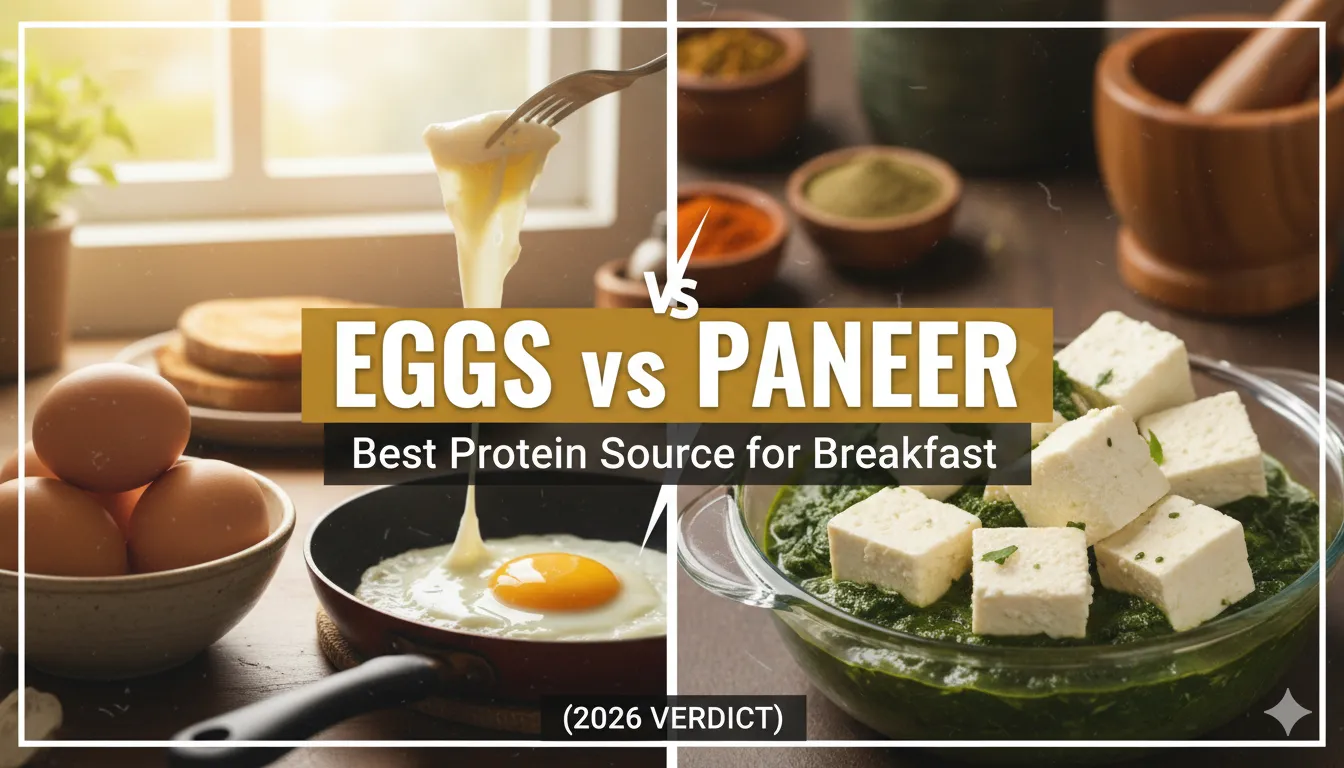
Eggs or Paneer for breakfast? We compare Protein, Cost (₹), and Calories to find the winner. Discover which source melts fat faster in our 2026 Clinical Guide.
- 1. Introduction
- 2. Direct Answer Summary
- 3. Eggs vs Paneer: At a Glance
- 4. The Protein Quality Battle: Biological Value & Bioavailability
- 5. For Weight Loss: Which Melts Fat Faster?
- 6. Muscle Gain & Gym Beginners
- 7. Impact on Heart Health & Cholesterol
- 8. Diabetes Focus: Glycemic Index & Insulin
- 9. Digestive Health & Gut Issues
- 10. Cost Comparison (India Context 2026)
- 11. Decision Tree: Who Should Choose What?
- 12. Myth-Busting Section
- 13. Expert Recommendation: How to Eat
- 14. Medical Disclaimer
1. Introduction
Problem: Every morning, millions of Indians face the same dilemma. You want to ditch the carb-heavy parathas or poha for a high-protein breakfast to fuel your day, but you are stuck between two powerhouses: the humble Egg and the beloved Paneer (Indian Cottage Cheese).
Agitation: It is not just about taste. With rising cases of Type 2 Diabetes, heart issues, and obesity in India, making the wrong choice matters. Does paneer spike your cholesterol? Do egg yolks really cause heart disease? If you are a gym beginner or trying to lose belly fat, picking the wrong protein source could mean stalling your progress or consuming hidden calories that ruin your deficit. Misinformation on social media only makes this confusion worse.
Solution: In this evidence-based guide, we strip away the myths. Using the latest 2026 clinical data, we compare Eggs vs. Paneer on Biological Value, muscle synthesis, weight loss efficiency, and cost. By the end of this article, you will know exactly which protein source belongs on your breakfast plate.
2. Direct Answer Summary
Which is better: Eggs or Paneer?
For weight loss and affordability, Eggs are superior due to higher Biological Value (BV: 100), fewer calories, and essential B12. For sustained energy or vegetarians, Paneer is ideal due to Casein (slow-release protein) and high Calcium. However, paneer is calorie-dense; watch portion sizes if tracking fat intake.
The Winner: Eggs for strict fat loss; Paneer for satiety and bone health.
3. Eggs vs Paneer: At a Glance
Below is a quick comparison for a standard Indian breakfast serving size.
| Feature | 2 Large Whole Eggs (Approx. 100g) | Low-Fat Cow Milk Paneer (100g) | Malai (Full Fat) Paneer (100g) |
|---|---|---|---|
| Protein | 12g - 13g | 18g - 20g | 14g - 18g |
| Calories | ~140-150 kcal | ~200 kcal | ~280-320 kcal |
| Fat | 10g | 8g | 22g+ |
| Carbs | 1.1g | 3.5g | 3g |
| Key Nutrient | Vitamin B12, Choline | Calcium, Phosphorus | Calcium, Fat |
| Protein Speed | Fast (Quick absorption) | Slow (Casein) | Slow |
| Cost (India) | Low (₹12–16) | High (₹45–60) | High |
4. The Protein Quality Battle: Biological Value & Bioavailability
When we talk about a high protein breakfast India needs to understand that not all protein is created equal.
What is Biological Value (BV)?
Biological Value measures how efficiently your body absorbs and utilizes the protein you eat.
- Eggs (The Gold Standard): Eggs have a BV of 100 (used as the reference standard). They contain all nine essential amino acids in perfect ratios. This makes eggs the "perfect protein" for tissue repair and Muscle Protein Synthesis (MPS).
- Paneer: Dairy protein (Casein/Whey mix) generally has a high BV around 80–85. While excellent, it is slightly less efficient than eggs at immediate absorption but superior at sustaining amino acid levels in the blood over time.
PDCAAS Score
The Protein Digestibility Corrected Amino Acid Score (PDCAAS) is the global standard for evaluating protein quality.
- Eggs: 1.0 (Maximum score)
- Paneer: 1.0 (Maximum score)
- Verdict: Both are high-quality complete proteins.
Medical Insight: If you have just finished a morning workout, Eggs are better because they digest faster, spiking amino acids to repair muscles quickly. Paneer is rich in Casein, which forms a gel in the gut and digests slowly—great for preventing hunger, but less ideal for immediate post-workout recovery.
5. For Weight Loss: Which Melts Fat Faster?
For Indian readers targeting weight loss, calories per gram of protein is the most critical metric.
The Calorie Trap
To get roughly 18g of protein:
- Eggs: You eat 3 eggs ≈ 210 Calories.
- Full Fat Paneer: You eat 100g ≈ 300 Calories.
Paneer has a higher calorie density due to fat content. If you eat paneer bhurji made with oil, the calorie count skyrockets. Eggs allow you to consume high protein with fewer calories, leaving room for fiber (vegetables/oats) in your calorie budget.
Satiety Index (Feeling Full)
- Paneer Wins Here: Because paneer contains fat and casein, it slows down gastric emptying. A paneer breakfast can keep you full for 4–5 hours, preventing mid-day snacking.
- Eggs: High satiety, but faster digestion might lead to hunger sooner than paneer if not paired with fiber.
Expert Recommendation: For maximum weight loss, choose egg whites or whole boiled eggs. If choosing paneer, opt for homemade paneer using skimmed (double-toned) milk to slash the fat content by 50%.
6. Muscle Gain & Gym Beginners
Query: Eggs or paneer for muscle gain?
Building muscle requires the amino acid Leucine, which triggers muscle building.
- Eggs: Very high in Leucine. Excellent for stimulating MPS.
- Paneer: Contains healthy amounts of protein but is higher in fat, which can delay the absorption of nutrients if consumed immediately post-workout.
Strategic Timing:
- Post-Workout Breakfast: Eat Eggs. The rapid digestion helps immediate repair.
- Rest Days/General Breakfast: Paneer is excellent to keep a steady stream of amino acids flowing into muscles.
7. Impact on Heart Health & Cholesterol
This is the biggest fear for Indian patients.
Myth: Eggs Kill Your Heart
For years, people avoided egg yolks due to cholesterol. In 2026, medical consensus confirms that dietary cholesterol (found in eggs) has minimal impact on blood cholesterol for 70% of the population. Eggs increase HDL (Good Cholesterol).
The Paneer Reality
Paneer, especially full-fat varieties, is high in Saturated Fats.
- Heart Patients: Excessive saturated fat can raise LDL (Bad Cholesterol).
- Verdict: If you have high cholesterol, limit paneer intake or switch to low-fat cow milk paneer. Eat egg whites freely, and limit yolks to 3-4 per week based on doctor’s advice.
Medical Disclaimer: Patients with Hyper-responders gene to dietary cholesterol should consult their cardiologist. Generally, saturated fat (in paneer) is often a bigger concern for heart health than dietary cholesterol (in eggs).
8. Diabetes Focus: Glycemic Index & Insulin
India is the diabetes capital of the world. Which breakfast controls blood sugar better?
- Glycemic Index (GI): Both Eggs and Paneer have a GI near zero (they contain negligible carbs).
- Insulin Response:
- Paneer: Dairy proteins can stimulate an insulin response (insulinotropic), which can actually help lower blood sugar when paired with carbs, but the fat content can induce insulin resistance if consumed in excess over time.
- Eggs: Minimal impact on insulin.
Winner for Diabetics: Both are excellent. They prevent the blood sugar spikes caused by cornflakes or bread. However, diabetics must be wary of the calorie density of paneer to manage weight.
9. Digestive Health & Gut Issues
- Lactose Intolerance: Roughly 60% of South Indians and many North Indians have some degree of lactose malabsorption. Paneer is low in lactose (mostly removed in whey water), but sensitive individuals may still bloat.
- Eggs: Contain sulfur, which can cause gas in some, but are generally allergen-free unless one has a specific egg allergy.
10. Cost Comparison (India Context 2026)
Eating healthy must be sustainable for the wallet.
- Eggs: ₹7 to ₹8 per piece.
- For 18g Protein (3 eggs): ~₹24
- Paneer: ₹480/kg.
- For 18g Protein (100g): ~₹48
Analysis: Eggs are 50% cheaper than paneer for the same amount of protein. For students and budget-conscious families, eggs are the undisputed winner.
11. Decision Tree: Who Should Choose What?
Are you Vegetarian (No meat/eggs)?
- Yes: Paneer (Choose low fat). Supplement with Whey/Lentils.
- No: Go to next question.
Is your goal aggressive Weight Loss?
- Yes: Eggs (Mostly egg whites + 1 yolk).
- No: Go to next question.
Are you Diabetic?
- Both are good. Rotate them. Monitor oil used in cooking paneer.
Do you have limited budget?
- Eggs are the most cost-effective protein source.
Are you snacking at night?
- Paneer. The Casein protein will prevent muscle breakdown while you sleep.
12. Myth-Busting Section
| Myth | Fact |
|---|---|
| "Egg yolks cause heart attacks." | False. Moderate consumption (1-2/day) is safe for healthy adults. Saturated fat in junk food is the real villain. |
| "Raw paneer is better than cooked." | Raw paneer keeps live cultures intact, but cooking doesn't destroy protein. Cooked is safer to avoid bacterial contamination. |
| "Paneer is 'light' food." | No. Paneer is heavy and calorie-dense. A standard "Paneer Butter Masala" serving can exceed 600 calories. |
| "Brown eggs are healthier." | Myth. Shell color depends on the hen's breed. Nutritional value is identical to white eggs. |
| "Protein damages kidneys." | False. For healthy individuals, high protein is safe. Only those with pre-existing kidney disease need to limit intake. |
13. Expert Recommendation: How to Eat
As a nutritionist, I recommend a Hybrid Approach. Don't bore your palate.
The Ideal Weekly Breakfast Rotation:
- Monday (Busy Morning): 3 Boiled Eggs + 1 Apple. (Fast, High Protein).
- Tuesday (Vegetarian Day): 100g Grilled Paneer + Toast. (High Calcium).
- Wednesday (Post-Gym): Scrambled Eggs (3 whites, 1 whole) with Spinach.
- Thursday: Paneer Bhurji (made with minimal ghee) wrapped in a multigrain roti.
Portion Guide:
- Men: 3 Whole Eggs or 100-150g Paneer per meal.
- Women: 2 Whole Eggs or 70-100g Paneer per meal.
14. Medical Disclaimer
The content provided in this article is for informational purposes only and is derived from nutrition science available as of January 2026. It is not a substitute for professional medical advice, diagnosis, or treatment. Always seek the advice of your physician or qualified health provider with any questions you may have regarding a medical condition or dietary changes, especially if you have renal issues, cardiovascular disease, or severe allergies.