
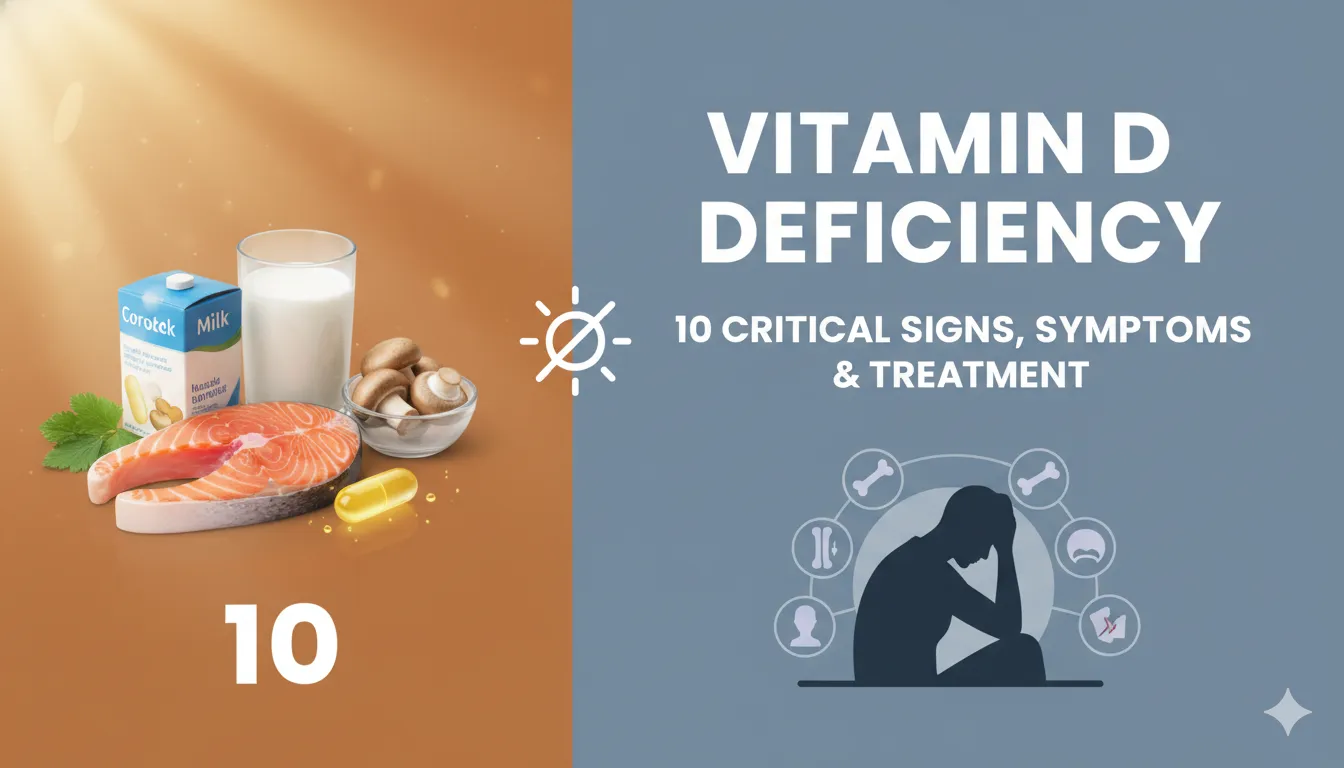
Vitamin D, commonly recognized as the "Sunshine Vitamin," is deceptive by name. Biologically, it is not merely a vitamin; it is a powerful pro-hormone (seco-steroid) that impacts the genetic expression of over 2,000 genes. From regulating calcium absorption for bone integrity to acting as a switch for your immune system, it affects every single cell in the human body.
Despite being evolutionarily designed to produce this nutrient via sunlight, we are facing a "Silent Epidemic." Modern lifestyles, darker skin pigmentation, sunscreen use, and indoor work environments have led to over 1 billion people worldwide suffering from Vitamin D Deficiency (Hypovitaminosis D).
If you have recently received a blood test report showing low 25-hydroxyvitamin D [25(OH)D] levels, or are noticing vague symptoms like persistent fatigue, deep bone ache, or hair loss, you are not alone. Whether you are looking for specific medical data or searching for local terms like "vitamin d ki kami ke lakshan," this guide—medically reviewed and updated for 2026—covers everything you need to know, from physiological mechanisms to disease risks and a complete roadmap to recovery.
Quick Summary: What are the symptoms of Vitamin D Deficiency?
Here is the quick checklist of the 10 most common signs of low Vitamin D levels:
- Deep Bone Pain (Osteomalacia): Throbbing pain in lower back or legs.
- Chronic Fatigue: Feeling exhausted despite sleeping well.
- Muscle Weakness: Difficulty climbing stairs or standing up.
- Frequent Illness: Catching colds/flu often due to weak immunity.
- Depression & Mood Swings: Links to SAD and anxiety.
- Hair Loss (Alopecia): Especially in women (female pattern hair loss).
- Skin Issues: Pale skin, dark circles, and slow wound healing.
- Slow Wound Healing: Cuts take longer to repair.
- Bone Fractures: Brittle bones leading to easy breakage.
- Back Pain: Persistent pain often mistaken for muscle strain.
- 1. What Is Vitamin D Deficiency (Hypovitaminosis D)?
- 2. 10 Critical Signs and Symptoms of Vitamin D Deficiency
- 3. Demographic Specifics: Women, Men, and Children
- 4. Major Causes and Risk Factors: Why Are Levels Decreasing?
- 5. Diagnosis: The Vitamin D 25-Hydroxy Test
- 6. Long-Term Diseases: Vitamin D Deficiency Health Problems
- 7. Treatment Protocols: Improving Vitamin D Levels
- 8. Natural Sources: Sunlight & Diet
1. What Is Vitamin D Deficiency (Hypovitaminosis D)?
Understanding the Role of the "Sunshine Vitamin"
To truly understand deficiency of vitamin D, one must first grasp its primary function. Vitamin D is essential for the intestinal absorption of calcium, magnesium, and phosphate. Without sufficient Vitamin D, your body cannot absorb the calcium from the food you eat, no matter how much milk or cheese you consume.
When absorption fails, the body enters a survival mode. It must maintain calcium levels in the blood to keep your heart beating. To do this, it "robs" calcium directly from your bones (the body's calcium bank). This leaching process weakens the skeleton, leading to the condition known as deficiency.
D2 vs. D3: Knowing the Difference
When searching for a medicine for vitamin d deficiency, you will likely encounter two chemical variations. Understanding these is critical for effective treatment:
- Vitamin D2 (Ergocalciferol): This form is primarily sourced from plants, fortified foods (like almond milk or cereal), and certain UV-exposed mushrooms. It is often the form found in high-dose prescription capsules (such as Drisdol). People often search "vitamin d2 kya hai"—simply put, it is the plant-based variant.
- Vitamin D3 (Cholecalciferol): This is the biologically active form sourced from animal products (fatty fish oil, liver, egg yolks) and, most importantly, produced by human skin under UVB sunlight. Cholecalciferol vitamin d3 uses typically focus on rapid rehabilitation of levels because the liver processes D3 much more efficiently than D2. Most over-the-counter vitamin supplements d are now D3 for this reason.
2. 10 Critical Signs and Symptoms of Vitamin D Deficiency
Many patients ask, "if vitamin d is low what happens?" The answer is complex because receptors for this vitamin are found in the brain, heart, muscles, and immune cells. Symptoms are often subtle at first (clinical insufficiency) but become debilitating as levels crash (severe deficiency).
Here is a detailed breakdown of the comprehensive signs and symptoms of a vitamin d deficiency:
1. Deep Bone Pain (Osteomalacia)
This is often the first and most defining vitamin d deficiency sign. Unlike the sharp pain of an injury or the soreness of exercise, this pain is deep, throbbing, and diffuse. Patients often feel it in the lower back, pelvis, hips, ribs, and legs (vitamin d deficiency legs is a common search complaint). This sensation arises because the collagen matrix covering the bones becomes soft and sensitive due to a lack of minerals.
2. Unexplained Chronic Fatigue and Exhaustion
Fatigue is a vague symptom, but when linked to low D levels, it presents as a feeling of "heaviness." You may sleep for 8 to 10 hours but still wake up unrefreshed. Low vitamin D suppresses mitochondrial function—the power plants of your cells—leading to symptoms of deficiency of vitamin d manifesting as crushing tiredness.
3. Muscle Weakness and Twitching
Beyond the skeleton, Vitamin D is crucial for muscle function. Vitamin d3 deficiency symptoms include difficulty in standing up from a low chair, climbing stairs, or a reduced grip strength. In severe cases, patients may experience tremors or fasciculations (twitching) linked to secondary calcium imbalance.
4. Frequent Illness and Infections
One of the most researched vitamin d benefits is its role in immune modulation. Vitamin D acts as a "light switch" for your T-cells, which hunt down viruses and bacteria. A classic sign of deficiency is getting sick often—frequent colds, bronchitis, pneumonia, or cuts that become infected easily. This is often described as having "weak immunity."
5. Depression and Mood Regulation
There is a strong biological link between lack vitamin d and mental health. Vitamin D receptors in the brain help regulate the production of serotonin (the hormone associated with happiness) and dopamine. Deficiency is highly correlated with Seasonal Affective Disorder (SAD), general anxiety, and unexplained feelings of sadness or depression.
6. Severe Hair Loss (Alopecia)
While hair shedding is normal, aggressive hair loss is one of the distinct low vitamin d symptoms female populations face. When Vitamin D levels plummet, the hair follicle cycle is disrupted, causing hair to shed excessively and preventing new growth. This can look like Female Pattern Hair Loss or Alopecia Areata.
7. "Before and After Vitamin D Deficiency Face" (Skin Health)
The skin is where Vitamin D is made, and it suffers when levels are low. Vitamin d deficiency for skin presents as a dull, grayish, or "pasty" complexion. You may notice dark circles under the eyes that do not go away with sleep. Furthermore, conditions like eczema, psoriasis, and acne are much harder to treat when the skin's local immunity is compromised by a deficiency of vitamin d on skin.
8. Impaired Wound Healing
Vitamin D controls the production of compounds crucial for forming new skin and tissue as part of the wound-healing process. If you notice that small cuts from shaving or minor surgeries take weeks longer than normal to heal, you may have a skin vitamin d deficiency.
9. Bone Fractures and Breakage
In older adults, the most dangerous symptom is not pain, but structure failure. Low vitamin levels lead to brittle bones (Osteoporosis). A simple fall or a bump against a doorframe can result in a fracture. This is the end stage of long-term untreated deficiency.
10. Back Pain and Proximal Weakness
Lower back pain is ubiquitous, but when treatment (rest, massage, ice) fails to resolve it, D deficiency is often the culprit. This is often associated with proximal muscle weakness—weakness in the muscles closest to the center of the body (thighs and shoulders).
3. Demographic Specifics: Women, Men, and Children
Low Vitamin D Symptoms Female
Women are uniquely vulnerable to this deficiency due to hormonal fluctuations throughout life (puberty, pregnancy, menopause). Symptoms of vitamin d deficiency in females often manifest as:
- Severe PMS symptoms (mood swings and cramping).
- Early-onset osteopenia (bone loss) during pre-menopause.
- Post-partum depression intensity.
- Severe fatigue that is often misdiagnosed as "mom brain" or stress.
Vitamin D Deficiency in Men
In men, d vitamin deficiency symptoms can include low testosterone levels (as Vitamin D is essential for testosterone production), loss of muscle mass, erectile dysfunction linked to cardiovascular health, and prostate health concerns.
Signs in Children and Infants
Parents asking "what are the symptoms of deficiency of vitamin d" in children should look for:
- Delayed walking or crawling.
- Soft skull (craniotabes).
- Irritability and excessive sweating (especially on the forehead).
- Bowed legs (Genu Varum): The hallmark sign of Rickets, where the leg bones curve outward because they are too soft to support the child's weight.
4. Major Causes and Risk Factors: Why Are Levels Decreasing?
Understanding the vitamin d deficiency reasons is the first step toward prevention. It is rarely just one cause; it is usually a combination of environmental and lifestyle factors.
A. Lack of Sun Exposure (The "Vitamin From Sunlight" Problem)
This is the most significant cause. Humans are meant to get 90% of their D3 from UVB rays. However, the modern lifestyle involves spending 90% of our time indoors. Furthermore, during winter months in latitudes above 37 degrees north (like Europe or North America), the sun is too low in the sky to produce any Vitamin D, leading to a "Vitamin D Winter."
B. Skin Pigmentation (Melanin)
There is a strong correlation between darker skin tones and deficiency. Melanin acts as a natural sunblock (SPF). An individual with very dark skin (African, Hispanic, South Asian descent) may need 3 to 6 times more sun exposure than someone with pale skin to produce the same amount of vitamin from the sun. This puts darker-skinned individuals at a massive disadvantage in Northern climates.
C. Excessive Sunscreen Usage
While protecting skin from cancer is vital, sunscreens with SPF 30+ reduce the skin’s ability to produce Vitamin D by roughly 95-99%. This creates a paradox where health-conscious individuals are often the most deficient.
D. Obesity and Body Composition
Vitamin D is a fat-soluble vitamin. This means it gets stored in fat tissue. In individuals with obesity (BMI over 30), the vitamin gets "sequestered" or trapped inside the adipose (fat) tissue and cannot circulate freely in the blood. Therefore, individuals with higher body weight often require significantly higher doses (2-3x normal) to correct a decrease vitamin d condition.
E. Malabsorption and Gut Health
You are what you absorb. Conditions that affect the gut—such as Crohn's disease, Celiac disease, Cystic Fibrosis, and Irritable Bowel Syndrome (IBS)—block fat absorption. Since Vitamin D rides on fat, it passes right through the system. Those who have undergone Bariatric Surgery (gastric bypass) are at severe risk.
F. Medication Interactions
Check your medicine cabinet. Several common drugs can deplete Vitamin D levels or block its absorption, leading to medical vitamin d needs:
- Glucocorticoids (Steroids like Prednisone).
- Weight-loss drugs (Orlistat/Alli).
- Cholesterol-lowering drugs (Cholestyramine).
- Seizure medications (Phenobarbital, Phenytoin).
5. Diagnosis: The Vitamin D 25-Hydroxy Test
Do not guess—test. Because vitamin d deficiency signs are nonspecific, clinical diagnosis is mandatory.
The Gold Standard Test
You must request a 25-hydroxy vitamin D blood test.
Hindi search term: vitamin d 25 hydroxy in hindi.
Note: Do not confuse this with "1,25-dihydroxy," which is a different test usually reserved for kidney patients.
Understanding Your Results (Vitamin D3 Normal Value)
Interpreting vitamin d 25 hydroxy results can be confusing as labs vary. However, the Endocrine Society guidelines generally define the ranges as follows:
| Status | Range (ng/mL) | Range (nmol/L) | Health Implication |
|---|---|---|---|
| Severe Deficiency | Less than 12 ng/mL | Less than 30 nmol/L | High risk of Rickets/Osteomalacia. Requires immediate, high-dose medical treatment. |
| Deficiency | 12 – 20 ng/mL | 30 – 50 nmol/L | Increased risk of bone loss and secondary hyperparathyroidism. |
| Insufficiency | 20 – 29 ng/mL | 50 – 75 nmol/L | Levels are sub-optimal for maximum health but not immediately critical. |
| Optimal / Normal | 30 – 60 ng/mL | 75 – 150 nmol/L | Ideal range for immunity, bone density, and muscle function. This is the target vitamin d3 level normal. |
| Potential Toxicity | Over 100 ng/mL | Over 250 nmol/L | Risk of hypercalcemia (calcium buildup). |
6. Long-Term Diseases: Vitamin D Deficiency Health Problems
Many readers ask, "vitamin d ki kami se konsa rog hota hai" or "what are vitamin d deficiency diseases?" Ignoring the warning signs can lead to severe pathology:
- Rickets (in Children): Soft bones, skeletal deformities, and stunted growth.
- Osteomalacia (in Adults): Softening of the bones leading to muscular weakness and severe pelvic pain.
- Osteoporosis: The "silent thief" where bones become porous and brittle, leading to hip and spine fractures.
- Cardiovascular Disease: Research indicates a link between low D levels and hypertension, heart attack, and stroke risk.
- Autoimmune Diseases: Low levels are prevalent in patients with Multiple Sclerosis (MS), Rheumatoid Arthritis, and Type 1 Diabetes.
- Cancer Risks: Ongoing studies are investigating the link between deficiency and colorectal, breast, and prostate cancers.
7. Treatment Protocols: Improving Vitamin D Levels
Once diagnosed, how do you fix it? The vitamin d deficiency treatment plan depends on the severity of the results.
Medical Supplementation (Loading vs. Maintenance)
If your levels are critically low (below 12 ng/mL), a doctor will typically prescribe a High-Dose Loading Phase. This might involve taking 50,000 IU of Vitamin D2 or D3 once a week for 6 to 8 weeks to fill up the body’s reserves rapidly.
Once levels reach above 30 ng/mL, patients move to a Maintenance Phase. This involves a lower daily over-the-counter dose (typically 1,000 IU to 5,000 IU of D3) taken indefinitely to maintain the vitamin d3 normal value.
Cofactors: Vitamin K2 and Magnesium
Taking Vitamin D alone is not enough. Calcium and vitamin d deficiency symptoms often overlap. When you increase Vitamin D intake, your body absorbs more calcium.
Critical Tip: You must also ensure adequate intake of Vitamin K2 and Magnesium. K2 directs the absorbed calcium into the bones (where you want it) rather than into the arteries (where it causes calcification/heart issues). Magnesium is required to convert Vitamin D into its active form.
Safety and Toxicity
Can you overdose? Yes. Vitamin D is fat-soluble, meaning it builds up. Severe vitamin d deficiency symptoms should be treated under supervision. Toxicity leads to hypercalcemia, causing nausea, kidney stones, and heart arrhythmias.
8. Natural Sources: Sunlight & Diet
How to improve vitamin d naturally? A combination of sun and food is best.
Sunlight Strategy
Expose 30-40% of your skin (arms, legs, back) to direct midday sun for 10-20 minutes, 3 times a week. Do this without sunscreen. Once your time is up (before your skin burns or turns pink), apply protection. Darker skin may require 30-40 minutes.
Dietary Adjustments
Very few foods contain adequate amounts of the source vitamin d. You cannot rely on food alone to fix a severe deficiency, but it is vital for maintenance.
Top Sources:
- Fatty fish (Salmon, Trout, Mackerel, Sardines).
- Cod Liver Oil (A traditional powerhouse, containing Vitamin A and D supplements naturally).
- Beef Liver.
- Egg Yolks (from pasture-raised hens).
- UV-treated Mushrooms.
- Fortified Foods: Milk, orange juice, cereal, and plant-based milks.
Want the complete food guide? Don't guess with your grocery list. We have compiled the ultimate list of foods to naturally boost your levels.
Conclusion
Vitamin D deficiency is more than just a lack of sun; it is a systemic condition that undermines your immune system, weakens your skeletal structure, and affects your mental well-being. From symptoms of low vitamin d like relentless fatigue and hair loss to serious risks like Osteoporosis, the impact is profound.
However, the good news is that it is highly treatable. By understanding the causes of deficiency of vitamin d3, requesting the right blood tests, and following a regimen of cholecalciferol vitamin d3 uses combined with smart sun exposure, you can restore your vitality.
Do not wait for a fracture or severe illness to wake you up. If you identified with the symptoms in this guide, book an appointment with your healthcare provider today.
Start your journey to better health by fueling your body right. Check out our companion article on natural food sources: Vitamin D Rich Fruits & Vegetables: Top 35+ List (2026 Guide).
Disclaimer: The medical information provided in this article is for educational and informational purposes only. It is not intended to substitute professional medical advice, diagnosis, or treatment. Always consult a licensed healthcare professional or doctor (Endocrinologist) for personalized advice before starting any treatment, taking new supplements, or changing your healthcare routine.