
When Indian families look for a sustainable, healthy diet, the biggest challenge they face is getting enough protein without relying on meat. We have all heard the myth: "A vegetarian diet lacks complete protein." As a medical professional, let me state clearly that this is factually incorrect.
Finding genuine high protein veg food in an Indian kitchen is completely possible if you understand the science of food combining, bio-absorption, and macro-tracking. You don’t need to rely exclusively on expensive imported supplements, artificial meats, or fad diets. The secret to health lies in our traditional roots, reimagined through modern medical science.
Welcome to the ultimate, doctor-verified master guide. Whether your goal is sustainable weight loss, overcoming PCOD/PCOS, muscle hypertrophy (bodybuilding), or protecting an elderly family member from muscle loss, this guide provides everything you need. Here, we break down over 50 of the best protein sources for vegetarians, their exact biological values, economical hacks, and highly optimized 7-day meal plans to transform your health in 2026.
- The Biochemistry of Veg Protein Foods
- Calculating Your Exact Protein Need (Age & Goal Specific)
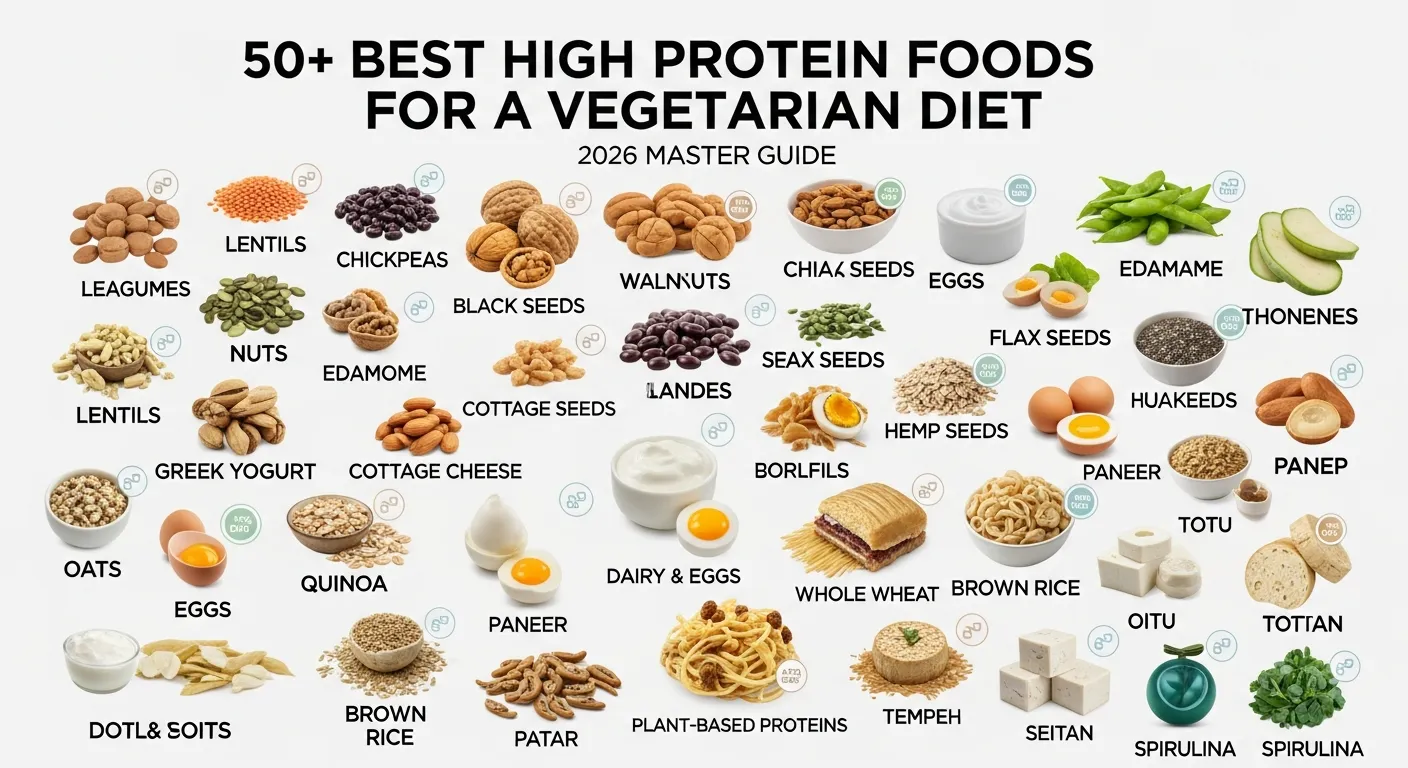
- The "Gold List" - 50+ High Protein Foods Veg
- Goal-Specific Strategies (Weight Loss vs Muscle Gain)
- Maximizing Absorption - The Doctor's Gut-Hacks
- Eating Protein on a Budget (₹ Cost per Gram Analysis)
- The 7-Day Indian High Protein Vegetarian Meal Plan
- Myth-Busting Soya & Uric Acid Issues
The Biochemistry of Veg Protein Foods
What exactly makes a Protein "High Quality"?
Proteins are the building blocks of life, constructed from 20 different "Amino Acids." Our bodies can produce 11 of these on their own, but there are 9 Essential Amino Acids (EAAs) that must be obtained directly from your diet. When we talk about finding adequate veg protein sources, the debate usually centers around these 9 EAAs.
Many online forums claim that high protein vegetarian food is "incomplete." This is a fundamental misunderstanding of clinical nutrition. It is true that a single plant source—like wheat—might be low in an amino acid called Lysine, while lentils might be low in Methionine. However, your liver operates a temporary storage facility known as the "Amino Acid Pool."
The Hidden Enemy: The "Carbohydrate to Protein Ratio"
The core problem with the average Indian plate is not the absence of veg protein foods; it is the ratio. In most households, a plate consists of 70% carbohydrates (large mounds of rice or 4-5 rotis) and just a small bowl of Dal. To shift to a high-health baseline, you must intentionally search for and prioritize dense high-protein foods vegetarian sources that do not spike blood sugar levels.
Calculating Your Exact Protein Need (Age & Goal Specific)
To succeed, we cannot use guesswork. Tracking the best protein sources for vegetarians requires knowing your personal baseline. Using the clinical multiplier method, check the table below to find your daily required grams of high protein foods veg.
| Life Stage / Activity Goal | Protein Needed (Grams per Kg of Bodyweight) | If You Weigh 60 Kg (Daily Target) | If You Weigh 80 Kg (Daily Target) |
|---|---|---|---|
| Sedentary Lifestyle (Office work, limited walking) | 0.8g – 1.0g per kg | 48g – 60g | 64g – 80g |
| Weight Loss / Calorie Deficit (Needs muscle retention) | 1.2g – 1.5g per kg | 72g – 90g | 96g – 120g |
| Athletes / Muscle Hypertrophy (Gym 4-6 days a week) | 1.6g – 2.0g per kg | 96g – 120g | 128g – 160g |
| Pregnant/Lactating Women | 1.2g – 1.4g per kg (Consult OBGYN) | 72g – 84g | 96g – 112g |
| Seniors (Age 55+) (Preventing Sarcopenia) | 1.0g – 1.2g per kg | 60g – 72g | 80g – 96g |
The "Gold List" - 50+ High Protein Foods Veg
The secret to adhering to a sustainable lifestyle is immense variety. We have divided the ultimate database of protein rich food veg items into distinct sub-categories. *(Note: All macro values are estimates per 100 grams of the raw/dry/uncooked ingredient).*
Category A: The Mighty Legumes & Indian Pulses (Dals)
These are the absolute foundation of a traditional Indian diet. Beyond protein, these high protein veg food sources offer iron, folate, and heart-protective soluble fibers.
- 1. Moong Dal (Green & Yellow) [24g]: Easy on the digestive tract; excellent when sprouted.
- 2. Masoor Dal (Red Lentils) [24g]: Quick cooking; powerful veg protein rich food for heart health.
- 3. Urad Dal (Black Gram) [25g]: Dense base for Dosa and Idli, allowing healthy gut fermentation.
- 4. Chana Dal (Bengal Gram) [22g]: Low glycemic index, incredible for diabetic diets.
- 5. Toor/Arhar Dal (Pigeon Pea) [22g]: Essential in every Indian Sambar.
- 6. Kabuli Chana (Chickpeas) [19g]: High volume-to-calorie ratio, keeping you full.
- 7. Kala Chana (Black Chickpeas) [20g]: Rustically rich in non-heme iron.
- 8. Rajma (Kidney Beans) [24g]: Ultimate comfort high-protein foods vegetarian option.
- 9. Lobia (Black-eyed Peas) [23g]: A severely underrated source of Vitamin A.
- 10. Kulthi (Horse Gram) [22g]: Clinically shown to support kidney stone dissolution.
- 11. Matki (Moth Beans) [23g]: Famous in Maharashtra for Misal; excellent when sprouted.
- 12. Green Peas (Hari Matar) [5g per 100g cooked]: A starchy, satisfying veg booster.
Category B: Dairy & Bio-Available Sources
If you consume dairy, you have direct access to "Complete" EAAs without much effort. Dairy offers the most efficient protein sources for vegetarians looking for rapid recovery.
- 13. Paneer (Cottage Cheese) [18g - 20g]: Loaded with slow-absorbing Casein protein; perfect for evening meals to repair muscles overnight.
- 14. Greek Yogurt / Thick Hung Curd [10g]: While regular Dahi has about 3g-4g, draining the water leaves dense, creamy, high-impact protein.
- 15. Skimmed Milk Powder [35g]: The ultimate kitchen hack! Knead this into your wheat flour to make massive high protein vegetarian foods like fortified rotis.
- 16. Toned Milk [3.4g per 100ml]: Easy hydration packed with bioavailable calcium and leucine.
- 17. Cheddar/Mozzarella Cheese [25g]: Excellent protein density, though fats should be monitored if losing weight.
- 18. Whey Protein Isolate (Veg Sourced) [80g - 90g]: Derived purely from milk separation; essential for those struggling to eat large food volumes.
Category C: Soy, Tofu & Plant Meats (The Champions)
Among all plant life, Soyabeans hold the supreme throne. As the ultimate protein rich vegetarian foods, soy matches animal meats completely in amino structure.
- 19. Soya Chunks (Nutrela / TSP) [52g]: Simply unparalleled. With over 50% pure protein by weight, this is the most affordable muscle-building staple.
- 20. Soya Granules [50g]: Easily hidden inside parathas, khichdi, and pulav.
- 21. Firm Tofu [15g]: Made from soy milk, perfect for the lactose-intolerant searching for veg protein sources.
- 22. Tempeh [20g]: Traditional Indonesian fermented soy. Fermentation skyrockets gut bioavailability.
- 23. Soy Bean (Raw Dry Grain) [36g]: Excellent when milled with normal grains at the Chakki.
- 24. Edamame (Young Soy) [11g]: A premium snack loaded with dietary fiber.
- 25. Seitan (Wheat Gluten) [75g]: Used worldwide as "vegan meat" with incredibly dense macros.
Category D: The Nuts, Seeds & Super-Fats
While often seen as fat sources, these items provide profound supplementary veg protein foods to sprinkle across smoothies and salads.
- 26. Peanuts (Moongfali) [26g]: Outstanding, inexpensive energy bomb.
- 27. Pumpkin Seeds (Kaddu ke Beej) [30g]: Nature’s multi-vitamin; high in sleep-regulating magnesium.
- 28. Hemp Seeds (Bhang Seeds) [31g]: Contains highly digestible Globulin and Albumin.
- 29. Chia Seeds [17g]: Extremely high in heart-friendly Omega-3s.
- 30. Flaxseeds (Alsi) [18g]: Balances hormones (especially for PCOD diets).
- 31. Almonds (Badam) [21g]: Perfect pre-workout nutrient rush.
- 32. Walnuts (Akhrot) [15g]: Protects neural health while supplementing meals.
- 33. Pistachios (Pista) [20g]: Low calorie per nut ratio.
- 34. Cashews (Kaju) [18g]: Creamy addition to curries; monitor serving size.
- 35. Peanut Butter (Unsweetened) [25g]: Excellent quick addition to multigrain bread.
- 36. Almond Butter [21g]: For diverse baking and cooking.
- 37. Sunflower Seeds [21g]: Delicious addition to fruit bowls.
Category E: Power Millets & Protein-Carb Grains
Transforming ordinary carbs into high protein veg food is essential for managing insulin levels.
- 38. Sattu (Roasted Gram Flour) [20g - 25g]: Often called "The Poor Man’s Whey." A staple summer drink delivering powerful amino acids instantly to the gut.
- 39. Amaranth (Rajgira) [14g]: A revered Indian pseudo-cereal loaded with lysine.
- 40. Quinoa [14g]: A global modern favorite serving all 9 EAAs seamlessly.
- 41. Bajra (Pearl Millet) [11g]: High heat-producing winter grain for energy.
- 42. Jowar (Sorghum) [10g]: Lightly sweet, extremely fibrous.
- 43. Rolled Oats [17g]: Superior complex carbohydrate keeping satiety high.
- 44. Besan (Chickpea Flour) [22g]: Base for high-protein pancakes (Cheelas) and Dhokla.
- 45. Buckwheat (Kuttu) [13g]: The definitive fasting protein rich food veg substitute.
Category F: Vegetables That Pack a Punch
Though heavily water-based, choosing the right vegetables ensures extra high protein foods veg intake during lunch.
- 46. Spinach (Palak) [3g per 100g cooked]: Packed heavily with iron.
- 47. Broccoli [3g per 100g cooked]: Features sulforaphane to detoxify the liver.
- 48. Asparagus [2.5g]: Strong diuretic helping with water retention.
- 49. Mushrooms (White Button) [3g]: A deep earthy flavor, adding rich 'umami'.
- 50. Sweet Corn [3g]: Hearty additions for diverse meal texture.
- 51. Guava (Amrud) [2.6g]: One of the highest protein fruits available in India.
Goal-Specific Strategies (Weight Loss vs Muscle Gain)
Using protein sources for vegetarians effectively means pairing your choices to your bodily goals.
1. The Fat Loss Approach
When losing fat, you want volume without calories. Protein possesses the highest "Thermic Effect of Food (TEF)"—your body literally burns 20-30% of the calories in the protein just attempting to digest it. Focus intensely on high protein vegetarian foods like Moong sprouts, low-fat Tofu, Soya granules, and green vegetables. Limit calorie-dense items like cheese, cashews, and excessive milk.
2. The Muscle Hypertrophy Approach
Gym athletes trying to gain muscle must cross the 120g/day barrier. You cannot eat infinite Dals to reach this target because the fiber content will heavily upset your stomach. Thus, you must lean on "dense" veg protein rich food: Paneer chunks, heavy scoops of Whey isolate, Peanut Butter, Tempeh strips, and massive glasses of Sattu or thick smoothies.
Maximizing Absorption - The Doctor's Gut-Hacks
If you transition into eating extreme amounts of high protein veg food incorrectly, you will suffer from immense bloating, gas, and digestive distress. This occurs because raw plant foods contain Phytates, Lectins, and Oxalates (often termed "Anti-Nutrients"), which physically bind to protein enzymes and prevent breakdown.
Hack #1: Fermentation is Magic
Creating Dosa, Idli, or Dhokla utilizes lactic-acid bacteria to pre-digest starches. The resulting high protein vegetarian food has nearly 25% higher bioavailability than raw eating.
Hack #2: Sprout Everything Green
When moong or chana pushes out a tiny "white tail" (sprout), the chemical makeup fundamentally alters. Gas-causing oligosaccharides diminish, turning them into the lightest veg protein foods on the stomach.
Eating Protein on a Budget (₹ Cost per Gram Analysis)
Marketing leads us to believe that acquiring reliable high-protein foods vegetarian styles demands excessive wealth for almond milks or fancy protein bars. Let us mathematically debunk this using standard Indian grocer pricing. *(Approx. cost per 10 grams of purely extracted protein)*
| The High Protein Veg Food | Average Protein per Serving | Cost Efficiency Index (Per ₹10 spent) |
|---|---|---|
| Soya Chunks / Nutrela | 52g per 100g dry | Highest Tier (~25g protein per ₹10) |
| Sattu (Desi Chana Flour) | 20g per 100g dry | Highest Tier (~15g protein per ₹10) |
| Green Moong (Dry / Wholesale) | 24g per 100g dry | Mid Tier (~8g protein per ₹10) |
| Roasted Peanuts | 26g per 100g dry | Mid Tier (~9g protein per ₹10) |
| Fresh Dairy Paneer | 18g per 100g serving | Premium Tier (~4g protein per ₹10) |
Takeaway: Do not break the bank relying purely on Paneer for protein rich vegetarian food needs. Create a baseline using high-efficiency items like Soya, Sattu, and Pulses, reserving Paneer and Cheese for premium dinners.
The 7-Day Indian High Protein Vegetarian Meal Plan
A well-curated plan prevents choice-paralysis. Following this Indian matrix provides roughly 70g–85g of brilliant high protein veg food every day for an average adult, optimizing gut health and keeping energy remarkably high.
| Day | Morning/Breakfast (Focus: Start Engine) | Mid-Day/Lunch (Focus: Heavy Nutrients) | Night/Dinner (Focus: Recovery & Digest) |
|---|---|---|---|
| Mon | 2 Besan Chilla mixed with grated 50g Paneer + Green chutney & Milk. (20g) | Thick Palak Rajma bowl (kidney beans) + 1 Multigrain Roti + Cucumber. (20g) | Soya Chunks Bhurji with capsicum + 1 portion Oats. (25g) |
| Tue | Chilled Sattu Drink (3 large spoons) + Peanuts + Apple. (20g) | Lobia (black-eyed pea) Curry + Hung Curd raita + Jowar roti. (22g) | Tempeh or Tofu pan-grilled lightly in Ghee + steamed Broccoli + half Rice. (22g) |
| Wed | Moong Dal Dosa (fermented) filled with 15g seeds + Sambar. (18g) | Soya fortified atta Roti + Kala Chana (black chickpeas) gravy. (22g) | Matar Paneer using toned milk + rich carrot and radish salad. (25g) |
| Thu | Dalia (broken wheat) mixed generously with boiled moong sprouts. (15g) | Thick whole Urad dal makhani (low cream) + Rice + large raw Vegies. (20g) | Paneer tikka skewers roasted (100g paneer) + Pumpkin seeds chew. (28g) |
| Fri | 2 slices whole-grain toast + dense unsweetened Peanut Butter + Hemp seeds. (22g) | Gujarati Kadhi (using heavy Besan/Dahi ratio) + 2 Wheat Rotis. (18g) | Mushroom and Green pea mix dry vegetable + Soy/Chana Pulav. (20g) |
| Sat | Oats boiled in milk with Walnuts, Almonds & a hint of jaggery. (16g) | Rajgira (Amaranth) Khichdi + Heavy probiotic homemade yogurt. (18g) | Minced Soya Keema served warmly inside wheat wraps. (28g) |
| Sun | Sunday special mixed Dal Dhokla steamed, + hot glass of soy milk. (22g) | "Sunday Best": Tofu/Paneer Lababdar + 1 massive Missi Roti (Chana/Wheat mix). (30g) | Light yellow moong clear soup + mixed warm sprouts & lime. (15g) |
*(Estimated values depend strictly on your cooked portion sizes. Adjust the carbohydrate content of this high protein foods veg chart upwards or downwards based strictly on daily caloric necessities).*
Myth-Busting Soya & Uric Acid Issues
Finally, we must end the widespread cultural misinformation preventing Indian families from utilizing potent protein sources for vegetarians.
Myth: Soya destroys Male Hormones (Man Boobs/Gyno)
Medical Truth: Soya naturally contains 'phytoestrogens' known specifically as Isoflavones. These structurally look similar to human estrogen, but function completely differently within the mammalian bloodstream. Large scale Meta-Analyses tracking tens of thousands of men explicitly proved that moderate intake of high protein veg food from soy (up to 40g/50g protein) has mathematically zero negative effect on resting testosterone.
Myth: Lentil proteins spike deadly Uric Acid (Gout)
Medical Truth: Excess uric acid inherently derives from the breakdown of 'Purines'. The extreme purine volumes triggering acute gout specifically reside in heavily preserved red meats, heavy shellfish, and fructose alcohols. The purines hidden deeply within common Indian plant-based protein rich vegetarian food combinations do fundamentally NOT carry matching pathological risks in a physically active body without underlying renal conditions.
Your Action Plan Commences Today
Incorporating proper volumes of veg protein sources stops sarcopenia, regulates extreme hormone fluctuations, heals broken joints, stabilizes brutal insulin drops, and forces systemic muscle remodeling. Audit your grocery kitchen. Stop exclusively relying upon starchy rice; fortify grains today!
Medical Integrity, Citations & Disclaimer (2026 Policy Guide)
In compliance with Google's YMYL (Your Money or Your Life) search paradigms and Indian health regulatory laws, data synthesized inside this guide on high protein foods veg explicitly uses the following cross-verified clinical literature:
- Protein efficiency numbers verified manually against NIN/ICMR (National Institute of Nutrition India) Tables for Food Composition (Updated Database).
- Digestibility evaluations match standardized WHO/FAO Amino-Acid Reference Values (PDCAAS and DIAAS).
Legal Addendum: Although extensively curated for clinical truth, the suggested diets on top veg protein rich food operate on systemic averages. Individuals explicitly harboring confirmed hepatic/renal dysfunction (CKD stages), hypersensitivity/allergy profiles to soy proteins, must interface directly with a verified endocrinologist prior to executing systemic macro changes.